The pattern behind the total.
Leak Finder groups your recorded trades by setup, timing and habits, giving you specific history to investigate.
 AnvilIndependent software / Windows
The trades you forget can tell you a lot. Anvil brings your setups, timing and recorded habits into focus—so your next review has a place to start.
Bring the session in, compare it with your plan, and write down what needs attention. Keep the record and the reasoning together.
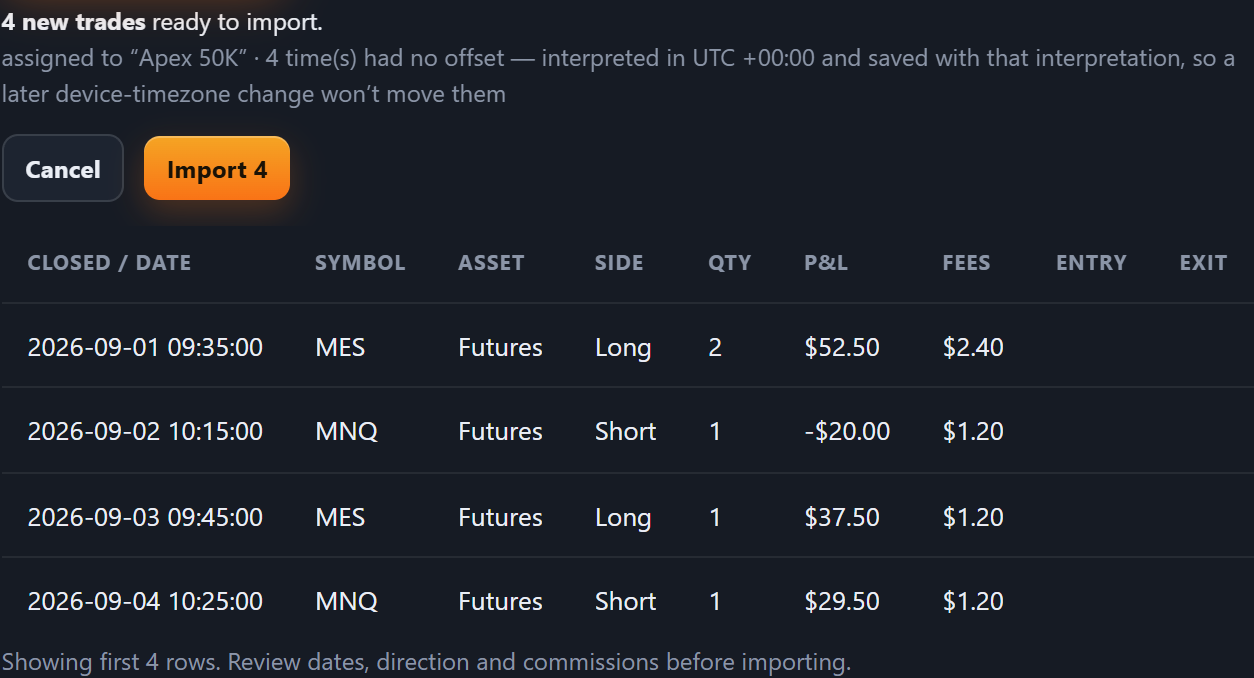
Preview a supported CSV report before it becomes part of your journal. Check the rows, account and commission settings, then save.
See supported export formats ↗Leak Finder groups your recorded trades by setup, timing and habits, giving you specific history to investigate.
Write down the context, entry and exit for a setup. See how the trades tagged with it performed.
Capture what you saw, what you followed and what you want to review while the session is still fresh.
Anvil runs locally on Windows. No account to create or cloud journal to maintain. Export a backup and keep a copy somewhere safe.
“I built it because I was sick of renting my own trading history.”
Anvil isn't a finished, walk-away product. I'm going to keep sharpening it for as long as traders use it.
A direct line to me. Free updates within v2. And a commitment to keep it simple: it's a tool, not a chore.
Anvil recognizes Tradovate Performance, NinjaTrader Trade Performance (Trades), a specific TradeStation transaction format, and English TradingView Account History closed-position rows. Other layouts may need conversion to the completed-trade template. Read the import guide ↗
The desktop app is for Windows. You can explore the browser demo on a Mac before deciding.
No. Buy the Windows app once and journal locally without an account. Updates within v2 are included.
Use the backup export regularly and keep a separate copy. Local storage stays on your device; it is not a cloud backup.
Anvil is a journaling and analytics tool, not financial advice. On-screen figures are sample data. Historical patterns do not predict future results. Trading involves substantial risk of loss.